
Gas fees are network usage fees charged when you send assets on a blockchain or execute programs (smart contracts).
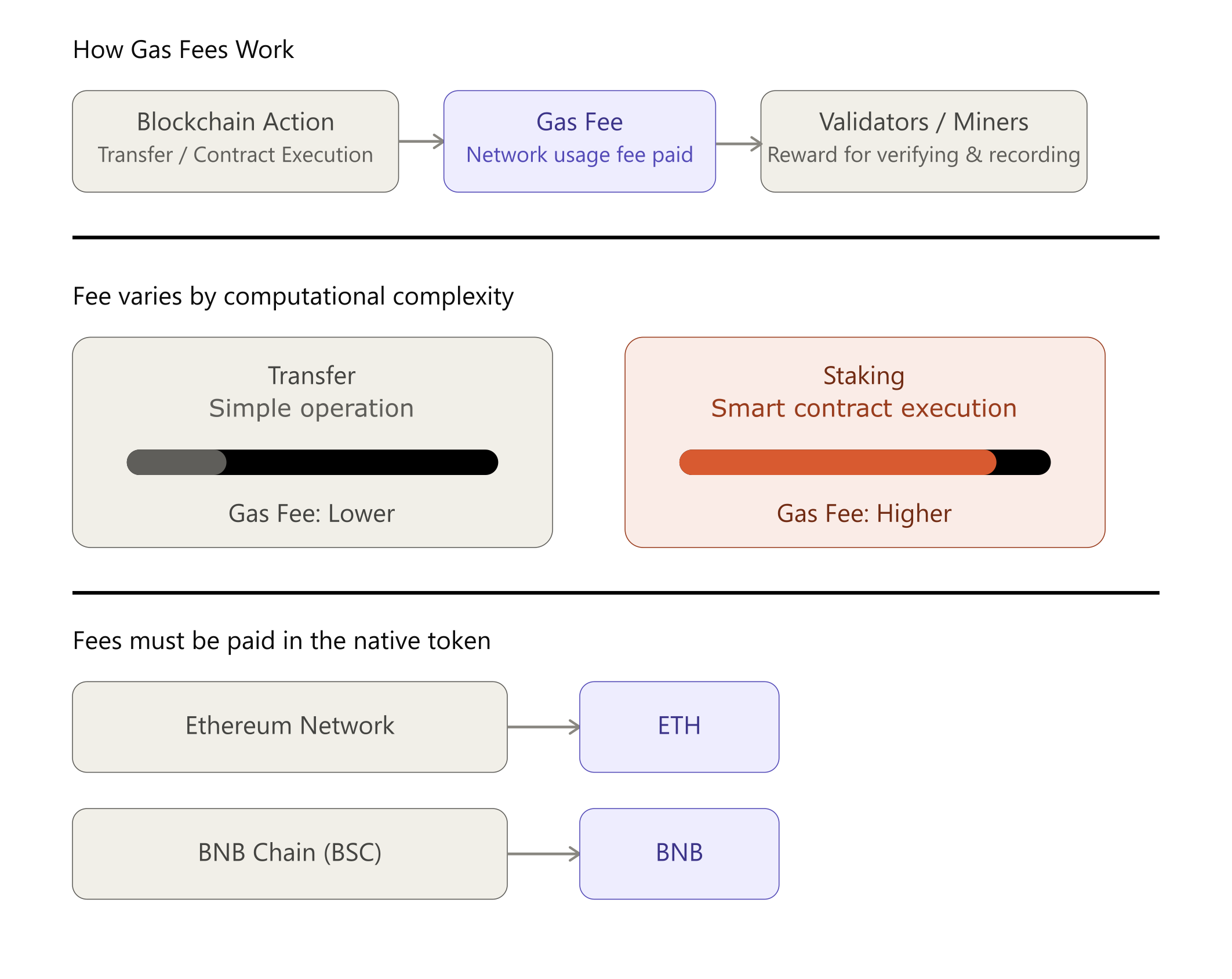
They are similar to the transfer fees you pay when sending money through a bank. On a blockchain, these fees are paid to network participants (such as validators or miners) who help verify and record transactions, as compensation for their work.
Gas fees also reflect the amount of computation required. Simple transfers generally use less gas, while operations that require more complex processing, such as staking, may consume more gas.
Paying with the Native Token
Gas fees are normally paid using the blockchain's own cryptocurrency, known as its "native token."
Ethereum network: ETH
BNB Smart Chain (BSC): BNB
Polygon: POL
For example, even if you want to send another token (such as USDT or JPYC) on the Ethereum network, the gas fee normally needs to be paid in ETH, rather than in the token you are sending. If your wallet does not have enough of the native token to cover the gas fee, you will not be able to complete the transaction.
Why Do Gas Fees Change?
Gas fees consist of a "base fee," which is adjusted automatically based on network congestion, and a "priority fee" (tip), which you can pay to encourage your transaction to be processed sooner.
The base fee tends to rise when the network is congested and fall when the network is less busy. If you want your transaction to be processed more quickly, paying a higher priority fee can make it more likely to be processed sooner.
Fees tend to be higher when the North American market is open. If you're not in a hurry, try making transactions during times when fees are lower.